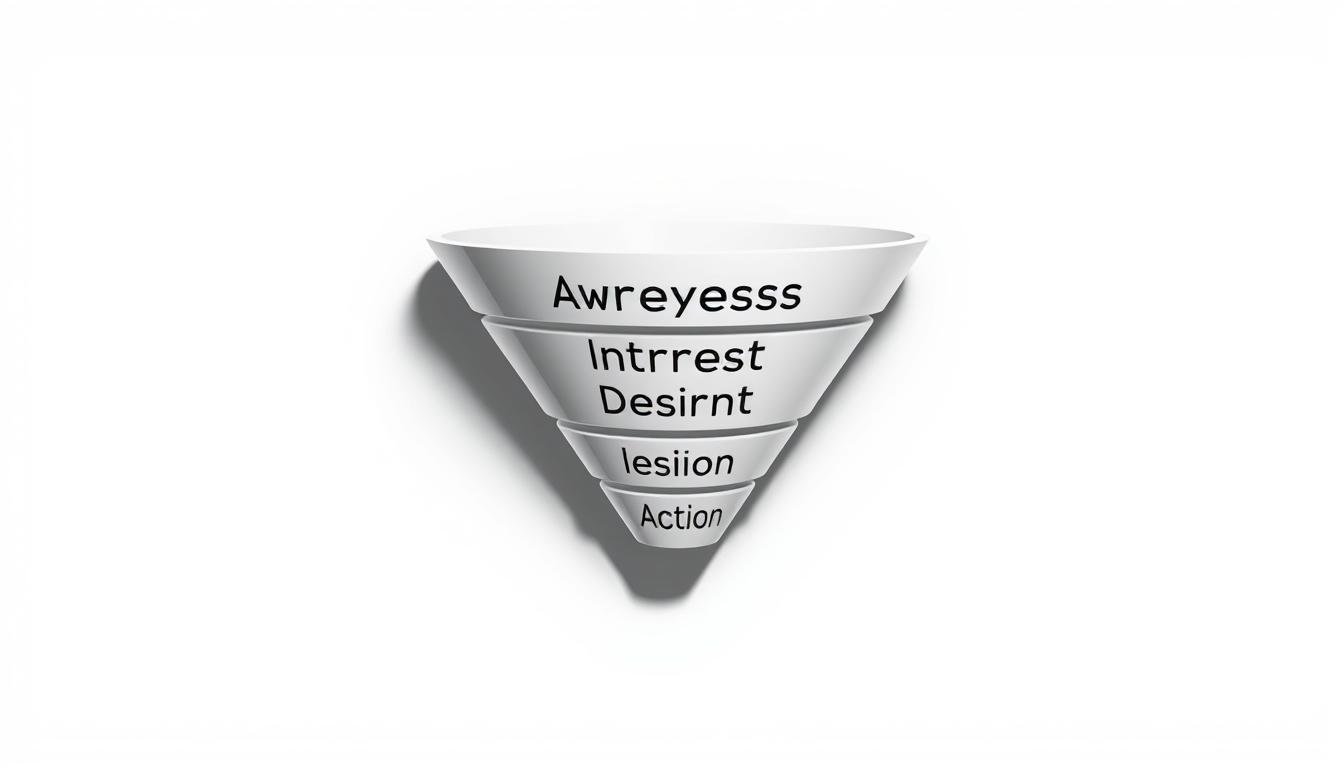
Creating an effective landing page is key for any marketing campaign. Recent data shows a well-designed landing page can boost conversions by 160% compared to other online sign-up processes. The AIDA formula is a classic marketing strategy to structure your message and get readers to act.
The AIDA model is simple: Attention, Interest, Desire, and Action. It offers a clear way to make compelling landing pages. By using this model, businesses can greatly improve their marketing and boost conversions.
Key Takeaways
- Understand the AIDA formula to create effective landing pages.
- Apply the AIDA model to boost conversions.
- Structure your message to encourage readers to take action.
- Enhance your marketing efforts with a proven marketing strategy.
- Increase conversions by creating compelling landing pages.
Understanding the AIDA Model: A Quick Overview
The AIDA model is key in marketing. It shows the four stages a customer goes through when buying something. This helps us understand how people make purchasing decisions.
What Does AIDA Stand For?
AIDA means Attention, Interest, Desire, and Action. Each part is important in the customer’s buying journey. Attention is about catching their eye, Interest is about making them curious, Desire is about making them want it, and Action is when they decide to buy.
The Importance of Each Element
Each part of the AIDA model is critical. Attention stops them from ignoring you. Interest keeps them engaged. Desire connects their needs to your product. And Action gets them to buy.
How AIDA Applies to Marketing
In marketing, AIDA helps create effective campaigns. Marketers understand their audience at each stage. They use visuals to grab Attention, stories to keep Interest, benefits to build Desire, and clear calls-to-action for Action.
Attention: Grabbing Your Audience’s Interest
Capturing attention is key to engaging your audience and boosting conversions. In today’s digital world, it’s tough to stand out and grab people’s interest.
Utilizing Eye-Catching Headlines
Creating eye-catching headlines is a top way to grab attention. Your headline is often the first thing people see. It can decide if they want to read more.
To make great headlines, focus on what benefits your product or service offers. Using action words or asking interesting questions can also grab people’s attention.
The Role of Visual Elements
Visual elements are key in catching eyes. Using high-quality images, videos, or graphics can make your content more appealing. They help explain complex ideas in a simple way and add to your page’s look.
Make sure your visuals match your message and brand.
Engaging Introductions That Captivate
After a catchy headline, write an engaging introduction that pulls people in. Your intro should clearly explain what your content is about and why it’s important.
To make your intro more engaging, start with a surprising fact, a personal story, or a thought-provoking question. This will keep your audience interested and wanting to read more.
Interest: Building Engagement with Your Audience

Once you’ve caught your audience’s eye, the next step is to keep their interest. This is key in the marketing funnel. It decides if they’ll keep reading or lose interest.
Crafting Compelling Content
Making content that grabs attention is vital. It’s about telling a story that speaks to your audience. This makes them feel heard and valued. Compelling content informs and entertains, encouraging more interaction.
Focus on what your product or service offers, not just its features. Use clear and concise language that meets your audience’s needs and wants.
Utilizing Storytelling Techniques
Storytelling is a strong marketing tool. It connects with your audience on an emotional level, making your message stick. By sharing stories that show your brand’s human side, you build a stronger bond.
Good storytelling has relatable characters, tension, and a resolution. It’s great for showing how your product or service has helped others. This builds trust and credibility.
The Power of Relatable Scenarios
Relatable scenarios are another great way to grab interest. By showing scenarios your audience can relate to, you make your content more engaging. This could be common problems your product or service solves.
Relatable scenarios help your audience see how your product fits into their lives. This makes it easier for them to see the value. It’s very effective in the sales funnel, helping guide people toward buying.
By using compelling content, storytelling, and relatable scenarios, you can build interest. This boosts engagement and moves your audience through the marketing funnel. It drives them in a positive direction.
Desire: Creating a Deep Emotional Connection

The desire stage is where you turn interest into a burning need for your product or service. It’s key to build a strong emotional bond with your audience at this point.
Businesses need to move from just listing features to showing the benefits that meet their audience’s needs and desires.
Highlighting Benefits Over Features
Customers care more about how a product or service will better their lives than its technical details. For example, instead of saying “our software has a robust analytics tool,” say “our software helps you make data-driven decisions that boost your business’s bottom line.”
By focusing on how your product or service meets the customer’s needs and dreams, you create a more engaging story.
Leveraging Social Proof for Trust
Social proof is a strong tool for building trust and desire. Customer testimonials, reviews, and case studies prove your product or service works as promised.
- Use real customer stories to show the impact of your product or service.
- Highlight any notable achievements or recognitions your business has received.
- Make sure your social proof is easy to find on your landing page.
Encouraging Aspirational Thinking
Aspirational thinking helps customers see a better future with your product or service. Show them how their lives will improve with what you offer.
For example, a fitness program might not just list exercises but how achieving fitness goals will boost confidence and energy.
By creating a deep emotional connection through benefits, social proof, and aspirational thinking, businesses can improve their marketing strategy and increase conversions.
Action: Inspiring Your Audience to Act

Once you’ve grabbed attention and sparked interest, it’s time to get results. The final step of the AIDA model is to turn interest into action. You need strategies that motivate your audience to take the action you want.
Effective Call-to-Action Techniques
A good call-to-action (CTA) is key to getting people to act. Your CTA should be clear, direct, and appealing. Using words like “Sign Up Now” or “Get Started Today” can boost your success rate. Make your CTA pop by using contrasting colors and placing it where it’s easy to see.
Tips for Effective CTAs:
- Use action-oriented language.
- Make it stand out with contrasting colors.
- Place it prominently on your page.
- Ensure it’s clear and direct.
Making the Process Simple and Clear
It’s important to make things easy for your audience. The fewer steps to take, the more likely they are to follow through. Simplify your sign-up or purchase process by cutting down on unnecessary steps and providing clear instructions.
| Process Element | Complicated | Simplified |
|---|---|---|
| Form Fields | 10 fields | 3 fields |
| Steps to Purchase | 5 steps | 2 steps |
| Instructions | Confusing | Clear |
Creating Urgency Without Pressure
Creating a sense of urgency can push your audience to act faster. Offers that are only available for a short time or are exclusive can work well. But, be careful not to push too hard. Use phrases like “Limited Time Offer” to encourage action without feeling forced.
Example: “Don’t miss out on our limited-time offer. Sign up within the next 48 hours to receive an exclusive bonus.”
By using these strategies, you can inspire your audience to take action. This will help you meet your marketing goals. The key is to make things simple, clear, and appealing, with a call-to-action that speaks to your audience.
Testing Your Landing Page Using the AIDA Model

To make sure the AIDA model works well, you need to test and improve your landing pages often. This means using different strategies to make your pages better and improve the customer experience.
Conducting A/B Testing for Optimization
A/B testing is key to making your landing pages better. It lets you see which parts of a page work best for your audience. You can test things like headlines, images, or buttons to see what gets more people to act.
For example, you might make two versions of a page with different headlines. Then, you can see which headline grabs attention and gets people more involved.
Gathering and Analyzing User Feedback
Getting feedback from users is also very important. You can do this through surveys, focus groups, or by watching how people use your site. This helps you find out what needs to be improved and make smart choices.
Feedback from users can tell you a lot. If people keep leaving your page at the same spot, it might mean you need to make your content easier to follow or improve the site’s feel.
Adapting Based on Performance Metrics
After you’ve tested and gotten feedback, it’s time to change your page if needed. You might need to tweak the content, layout, or design to match what your audience likes.
By keeping an eye on how well your page is doing and making changes, you can keep it working well. This is a never-ending job that needs regular checking and tweaking.
In short, testing and improving your landing page with the AIDA model is an ongoing task. It includes A/B testing, getting user feedback, and adjusting based on how well things are doing. By doing these things, you can make a stronger marketing strategy that helps more customers and gets better results.
Common Mistakes to Avoid in AIDA Implementation

To get the most out of the AIDA model, it’s key to avoid common mistakes. The AIDA model is a vital part of a good marketing strategy. It helps guide people from Awareness to Action.
Overloading with Information
Marketers often make the mistake of giving too much info. This can confuse people and make them stop buying. Instead, highlight the main benefits and what makes your product or service special.
Neglecting Mobile Responsiveness
Today, it’s all about mobile. Make sure your landing page works well on all devices. Consumer behavior is moving to mobile, so it’s vital to make your AIDA work on phones and tablets.
Ignoring the Importance of Follow-up
After someone buys, following up is key. It helps build a strong relationship and can lead to more sales. Not doing this can mean missing out on chances and not getting the most from your initial customer gain.
Knowing these common mistakes and how to avoid them can really boost your AIDA model use. This leads to better marketing strategy results and a deeper understanding of consumer behavior.
Case Studies: Successful AIDA Applications

Looking at case studies, we learn a lot about the AIDA model. We see how businesses use it to boost their marketing. This helps us understand its power.
E-commerce Success
An e-commerce company revamped its marketing with the AIDA model. They grabbed attention with catchy headlines and eye-catching visuals. This led to a 30% rise in click-through rates.
The secret to their success was connecting deeply with their audience. They showed the benefits of their products and used social proof.
“We saw a big jump in sales after using the AIDA model,” said Jane Doe, Marketing Director. “It helped us know our customers better and improve our marketing.”
Non-Profit Campaign
A non-profit’s fundraising campaign also thrived with the AIDA model. They made donations urgent and easy to give. This led to a 25% increase in donations.
The campaign’s success came from storytellingthat touched their audience.
“The AIDA model helped us connect with our donors on a deeper level and communicate the impact of their contributions.”
SaaS Product Launch
A SaaS company launched a new product with the AIDA model. They sparked interest with relatable scenarios and showed the product’s benefits. This led to a 40% rise in trial sign-ups.
The AIDA model gave them a clear plan for their marketing. It helped them track each stage and make smart decisions.
AIDA and SEO: Finding the Right Balance
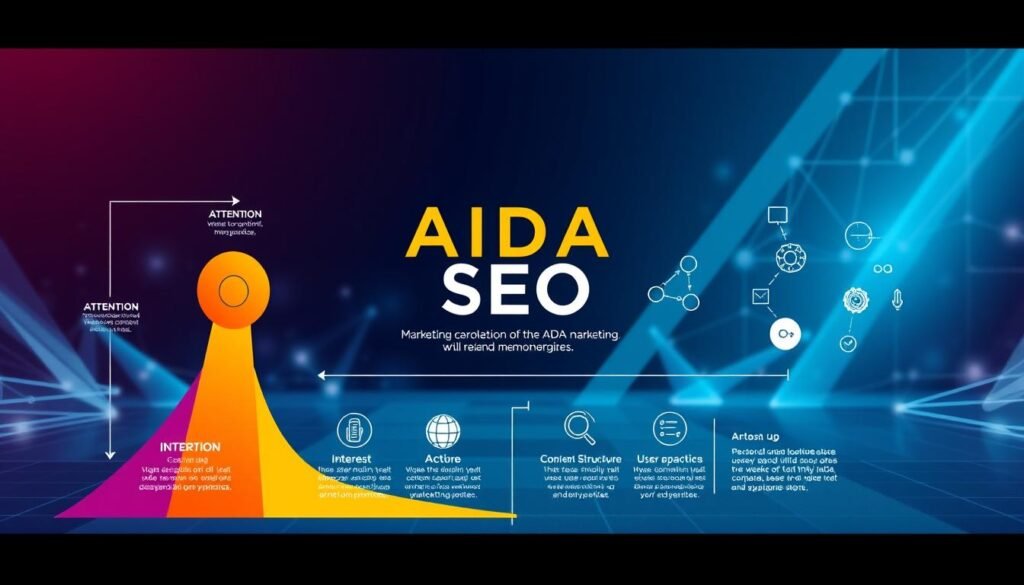
Combining the AIDA model with SEO can really boost a website’s visibility and conversion rates. It’s all about finding the right mix of these two important elements for success.
The AIDA model helps us understand the customer’s journey, from grabbing their attention to getting them to act. SEO makes sure your content is found by search engines and ranks well. Together, they create a strong marketing strategy that boosts both conversions and search rankings.
Naturally Incorporating Keywords
One big challenge is adding keywords naturally to your content. It’s key to use them in a way that feels natural and doesn’t mess up your message. Try using different forms of your target keywords and phrases in your content, not the same one over and over.
For example, if your main keyword is “digital marketing strategy,” use related terms like “online marketing techniques” and “digital campaign planning.” This makes your content more interesting to read and avoids keyword stuffing, which can hurt your SEO.
Crafting Meta Descriptions That Spark Interest
Meta descriptions are super important for getting people to click on your website from search results. Write meta descriptions that grab attention and match what your page is about. This can really help increase your site’s traffic.
A good meta description should give a clear idea of what’s on your page and why it’s valuable. Use action words and make sure it’s relevant to what the user is searching for.
“The key to successful meta descriptions is to make them compelling and relevant to the user’s search query, while also ensuring they accurately reflect the content of the page.”
Balancing User Experience with SEO Strategies
Finding the right balance between AIDA and SEO means knowing your audience well. Focus on creating content that speaks to them and improves engagement. This can lead to more conversions.
At the same time, make sure your content is SEO-friendly. Use keyword research, meta descriptions, and header tags to boost your site’s visibility. By balancing these two, you can create a marketing strategy that works for both short-term gains and long-term SEO success.
| Strategy | AIDA Model | SEO |
|---|---|---|
| Primary Focus | Customer journey and conversion | Search engine ranking and visibility |
| Key Techniques | Attention-grabbing headlines, compelling content, clear calls-to-action | Keyword research, meta descriptions, header tags, link building |
| Benefits | Improved conversion rates, enhanced customer engagement | Increased search engine rankings, higher visibility |
Enhancing the AIDA Model with Modern Tools

Marketing keeps changing, and using new tools is key to success. Technology helps make processes smoother and makes the customer journey more personal. This leads to better engagement and more sales.
Recommended Software for Design and Analytics
For the AIDA model to work well, you need good software for design and analytics. Adobe Creative Cloud is great for making eye-catching visuals. Google Analytics helps understand how customers behave. These tools make the Attention and Interest stages of the AIDA model better.
| Software | Function | Benefit to AIDA |
|---|---|---|
| Adobe Creative Cloud | Designing Visuals | Enhances Attention |
| Google Analytics | Understanding Customer Behavior | Improves Interest and Desire Stages |
Using AI to Personalize Content
AI has changed how businesses talk to customers. AI tools help make content that speaks directly to people, improving the Desire stage of the AIDA model. Now, personalizing content on a big scale is possible with AI.
“The best marketing doesn’t feel like marketing.”
AI makes messages feel personal and relevant. This makes customers feel understood and valued.
Automation for Follow-Up and Engagement
Automation is key in the Action stage of the AIDA model. It helps keep in touch with leads through automated emails and strategies. Tools like Mailchimp and HubSpot are very helpful for this.
In summary, using modern tools like AI and automation makes the AIDA model more effective. These technologies help create a more personal and engaging customer journey.
How to Train Your Team on the AIDA Model

Teaching your team about the AIDA model is key to a better marketing strategy. They need to grasp its basics and how to use it.
Developing Training Resources
Start by making solid training materials. This includes guides, webinars, and workshops that explain the AIDA model and its marketing uses.
For example, create a guide that breaks down the Attention, Interest, Desire, and Action stages. It should show how to use these in marketing campaigns.
| Training Resource | Description | Benefits |
|---|---|---|
| Guides | Detailed documents outlining the AIDA model and its application | Provides a deep understanding of the model |
| Webinars | Interactive online sessions discussing the AIDA model | Allows for live Q&A and engagement |
| Workshops | Hands-on sessions where teams can practice applying the AIDA model | Improves practical skills and teamwork |
Hands-On Workshops and Role-Playing
Workshops and role-playing are great for learning the AIDA model in action. They let teams practice making marketing messages that grab attention, spark interest, create desire, and prompt action.
For instance, you can have a role-playing session. Team members will present products or services using the AIDA model, getting feedback from others.
Continuous Learning and Adaptation
The marketing world changes fast. It’s important for your team to keep up with new trends and AIDA model best practices. Encourage them to keep learning and adapting.
Do this through regular training, workshops, and by letting team members share their experiences. This way, they can stay effective in their marketing work.
The Future of the AIDA Model in Digital Marketing

The AIDA model is set to shine in digital marketing, adapting to new consumer habits. As a marketer, I’ve seen its power in driving campaign success. We’ll look at how it evolves with trends, new channels, and the need for ongoing improvement.
Evolving Consumer Behavior Trends
Consumer habits change fast, thanks to tech and societal shifts. Marketers must update the AIDA model to keep up. For example, voice search changes how we interact with brands, so content needs to be optimized for voice.
Understanding these trends is key to making effective marketing strategies. This helps grab attention and boost engagement.
Personalization is also key, using data to make messages more relatable. Data-driven insights help create targeted campaigns that connect with audiences.
Integration with New Marketing Channels
New digital channels keep popping up, and the AIDA model must fit in. Social media, for instance, offers fresh ways to apply AIDA, like interactive content and influencer partnerships.
- Use social media to grab attention with eye-catching visuals and stories.
- Build interest with content that people want to share.
- Use social proof, like customer reviews, to create desire.
- Make it easy to act with clear calls-to-action.
Staying Ahead with Continuous Improvement
In digital marketing, staying ahead means always improving. Marketers should check their strategies often, using data and feedback. This might mean testing different campaign elements or analyzing performance.
By always looking to improve, businesses keep their marketing sharp and competitive. Updating the AIDA model regularly is essential for lasting success in the digital world.
Final Thoughts: Making the AIDA Model Work for You
Reflecting on my journey with the AIDA model, I see its power to change marketing. It helps businesses understand their customers better. This leads to more conversions and a better marketing plan.
Practical Implementation
To start, focus on creating engaging content and using stories. Also, show social proof to connect with your audience deeply.
Ongoing Optimization
Keep trying new things and learning. Use feedback from users and check your results. This way, you can make your marketing better and stay ahead.
By using the AIDA model and always improving, businesses can succeed in digital marketing. They can reach their goals in a changing world.